Skip to content
With the ever-growing possibility that AI will take more and more jobs, it’s time to take a look at US case law on AI and Copyright.
Introduction to case law on AI and Copyright
Innovation in artificial intelligence (AI) has been advancing at a rapid rate in recent years. The current AI technology can generate texts/essays, images and art through coding and data without human input. This has allowed a number of industries such as medicine and design to seek AI advancements.
However, even with the advancements, there are also concerns from human creators that AI works are copying human copyrighted work. Consequently, there is a growing legal dispute between human creators and AI companies. These facts are really important when it comes to US case law on AI and Copyright, as we will discuss later on.
What US case law on AI and Copyright Means for AI & AI Businesses
There is currently limited US case law on AI and Copyright. However, such content may be covered by prevailing legal theories and principles. For instance, copyright legislation may safeguard original works produced by AI, yet problems about authorship and ownership of such works still remain. Similar to how AI may be used to create material that causes harm or injury, tort law and product liability may also be relevant.
The problem of liability for content produced by AI is going to be one of the most important ones in the future. Who should be held accountable if AI produces libellous content, for example—the AI itself, the person who developed or taught the AI, or the platform where the content was distributed? These queries are probably going to get more important as AI develops and produces more complicated material.
Overall regarding U.S. case law on AI and Copyright, the development of case law in this area will be influenced by how far AI technology advances and the difficulties it poses for preexisting legal norms.
It will also depend on politicians’ and judges’ capacity to adjust to these fresh difficulties and create legal frameworks that fairly balance the advantages and disadvantages of AI-generated content. This is why US case law on AI and Copyright is so important when it comes to AI-generated content.
U.S Cases
There have been cases in the U.S. over the last year in which human creators have alleged that AI has been trained to generate their copyrighted material which infringes on the human creators’ rights.
Sarah Anderson, Kelly McKernan, and Kara Ortiz v Stability AI and Midjourney
This case involves a direct copyright infringement related to the forgery of billions of copyrighted images. The images were used in order to train the defendants AI image-generated platforms without the consent of the owners who have copyright protection over the images. The founder of Midjourney has effectively admitted to using a ‘hundred million’ images without the consent of copyright owners.
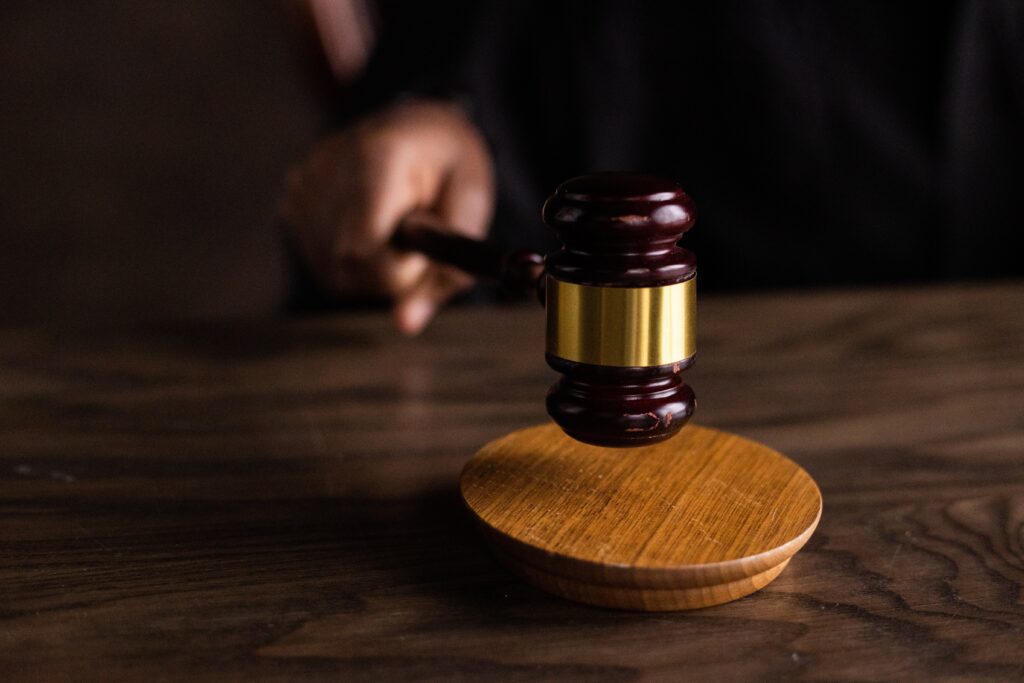
The lawsuit is currently ongoing, but it appears that a big aspect of Stability AI and Midjourney is the ability to generate images in the style of another artist that has worked in the public domain. This clearly creates an issue for artists that have created this work as their work can be recreated without any compensation which destroys any sustainable income the artist may have. This lawsuit is why US case law on AI and Copyright is so important and will be in the future.
Getty Images (US) Inc v. Stability AI Inc
Getty images sued the AI company, Stability AI for misusing 12 million Getty photos to train its Stable Diffusion AI image-generation system. The lawsuit filed in U.S. follows a separate Getty case against Stability AI in the UK related to a class action complaint filed by artists in California.
There is no doubt that there will be many more cases about U.S. case law on AI and Copyright involving companies like Getty Images and more.
Fair Use
Fair use is certainly important when it comes to U.S. case law on AI and Copyright. The principle of fair use is an important consideration in relation to AI disputes as it would allow Stability AI for example to use copyrighted material without the permission of the creator if the work is generated for transformative use.
Transformative use involves using copyrighted material in a way that something new and significant is added to the work rather than carrying out an exact reproduction of the original work.

This was demonstrated in the Supreme Court in 2021 with Google LLC v Oracle America where the court held that using the Java SE code to create a new operating system was transformative and was within the scope of fair use.
However, from the perspective of human creators, who are suing Stability AI, they claim that AI-generated works are not transformative as they do not add any extra creative aspect to the original work.
The decision of the AI-generated work being transformative will be judged on a case to cases basis depending on how much of the AI work has added to the original human-created work.
Conclusion
There are many things we may not have covered about U.S. case law on AI and Copyright, however, the numerous disputes arising between AI companies and human creators show that there is a need for a new legal framework that balances innovation with the rights of the creators.
Therefore, the cases stated are likely to have a huge say in the relationship between generative AI and human creators, as well as the principle of fair use.
A possible solution to repair the relationship is negotiating licencing agreements between AI companies and human creators which allows AI companies to develop their technology as well as protect the rights of human creators.
As Stability AI is a UK-based company it is possible that will see more disputes between the AI company and human creators in the UK courts. This is why US case law on AI and Copyright will be so important in the future.
If you have any queries regarding U.S. case law on AI and Copyright or an alternative matter, you can contact us at Lawdit today.
Tel: 023 8023 5979
E-mail: info@lawdit.co.uk
References for US case law on AI and Copyright
Here are some references for US case law on AI and Copyright. These are all links to high-authority sites and trusted sources for our article. Please browse them below.
- Artificial Intelligence (Wikipedia.ORG)
- US (Wikipedia.ORG)
- Copyright infringement (GOV.UK)
- Stability AI (Stability.AI)
- Midjourney (MidJourney.COM)
- Copyright (Wikipedia.ORG)
- Supreme Court of the U.S. (Wikipedia.ORG)
- 2021 with Google LLC v Oracle America (SupremeCourt.GOV)
- Stability AI Getty Lawsuit (TheVerge.COM)
- UK (Wikipedia.ORG)
Posts related to US case law on AI and Copyright
Here are some posts related to U.S. case law on AI and Copyright. Please browse them below, you can browse them below.
- Role of AI on Music and Implications on Intellectual Property
- Ep. 74- Ed Sheeran Court Case: 2nd Claim Threatens Epic Concert Exit
- Sentient Artificial Intelligence – Imminent Human Brain Replication
- Are AI songs legal? Fake Drake song gets taken down after getting millions of streams
- Genericide strikes again: Tupperware in trouble
- Shein Accused of Copyright Infringement by Nail Artist Yan Tee
- I own a social media company in Shangai. I would like some information about my company having a presence in the UK. Are there e-commerce laws?
- I am a Chinese lawyer and need some advice as to the UK’s court system. Can you explain the process of a claim in the UK and what court should we file a claim in and under?