With the assistance of AI Technology, users can use a set of parameters to create images and other content. It is controversial that if the work generated by AI protected by copyright law? Who owns the corresponding rights? Can AI-generated content from the internet be used freely?
Recently, a copyright infringement case ruled by the Beijing Internet Court may give a heads up in relation to the arguments above.
Introduction:
The claimant used an open-source software Stable Diffusion to generate the disputed image by inputting prompts and then published it on the Xiaohongshu platform. The defendant posted an article on Baidu Baijiahao, using the disputed image as an illustration. The plaintiff alleges that the defendant used the disputed image without permission and removed the plaintiff’s watermark. The claimant claimed that it could mislead the public to believe that the defendant was the author of the AI work. The claimant demanded a public apology and compensation for economic losses as a consequence of copyright infringement.
The defendant argued that they were unsure whether the claimant is the right owner of the disputed image. They defended that the article they posted is a poetry which created by themselves while the disputed image was not the centre of the attention compared to their poetry. It means the contribution of the disputed image to the popularity of their poetry is limited. Furthermore, they claimed that there was no commercial use or bad faith involved.
How the disputed image was produced:
The claimant explained the procedure of how it was created with the involvement of AI technology.
Step 1: They downloaded the Stable Diffusion model and subsequently entered dozens of prompts in both forward and reverse directions. And then they configured parameters such as the number of iterations, image height, prompt weight coefficient, and random seed to generate the first image;
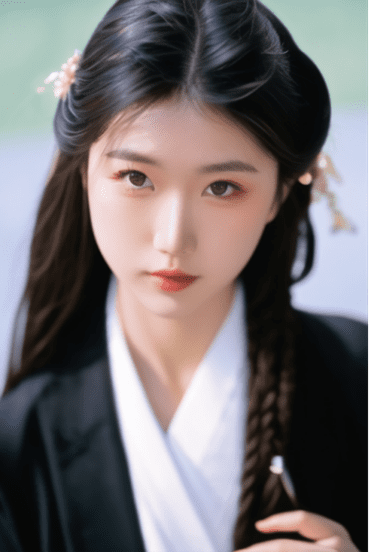
Step 2: In the same parameter configuration, the claimant modified the weight of one of the models and generated the second image;
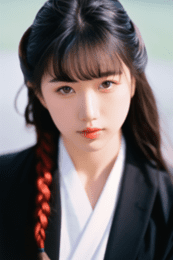
Step 3: With the parameters unchanged from the previous configuration, the claimant modified the random seed to generate the third image;
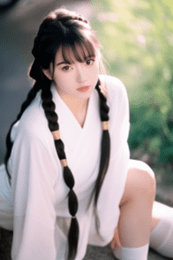
Step 4: While keeping the parameters the same as before, the claimant added additional content to the forward prompts to generate the fourth image, which is the disputed image.
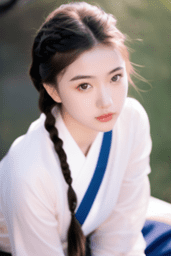
Some highlights of the judgement:
- The disputed image is a copyrighted work
The disputed image was generated by the claimant using artificial intelligence technology. During the process of the work creation, the claimant invested skill, labour and effort, such as designing the presentation of characters, choosing prompts, arranging the order of prompts, configuring relevant parameters, and selecting which image met their expectations. The disputed image reflects the intellectual input of the claimant, making it qualify as an “intellectual creation.”
Furthermore, in the absence of contradictory evidence, it can be concluded that the disputed image was independently created by the claimant, reflecting their individualized expression and, thus, meeting the requirement of “originality.”
The disputed image is a two-dimensional artistic work composed of lines and colours with aesthetic significance. It falls under the category of fine arts and is protected by copyright law.
- The claimant is the author and the copyright owner of the disputed image
Copyright law introduces that authors are limited to natural persons, legal entities, or non-legal entity organizations. Therefore, artificial intelligence models themselves cannot be considered authors as defined by copyright law in China. In this case, the claimant is an individual who made relevant settings for the AI model as needed and ultimately selected the disputed image. The disputed image was directly generated based on the claimant’s intellectual input and reflects the Claimant’s individual expression. Therefore, the claimant is the author of the disputed image and owns the copyright.
- The defendant has indeed infringed upon the rights owned by the claimant and should therefore be held liable for the infringement
The defendant, without obtaining permission, used the disputed image as an illustration and published it on their own account, making it accessible to the public at their chosen time and place. This action constitutes an infringement of the claimant’s right to disseminate the image on the internet. Furthermore, the defendant removed the watermark from the disputed image, infringing upon the claimant’s right to attribution. As a result, the defendant should be held responsible for the infringement.