You’ve probably heard of the oddball acronym FNSKU if you’re a supplier selling on Amazon, particularly if you use Fulfilment by Amazon, or FBA. Although it may appear to be alphabet soup, just six characters have the power to distinguish between seamless operations and major hassles on Amazon. Don’t worry; you’re not the only one who finds oneself saying, “I have an issue with my FNSKU.” Let’s examine what an FNSKU is, its significance, and how to avoid the typical problems that suppliers encounter when using these Amazon barcodes.
What is an FNSKU, anyway?
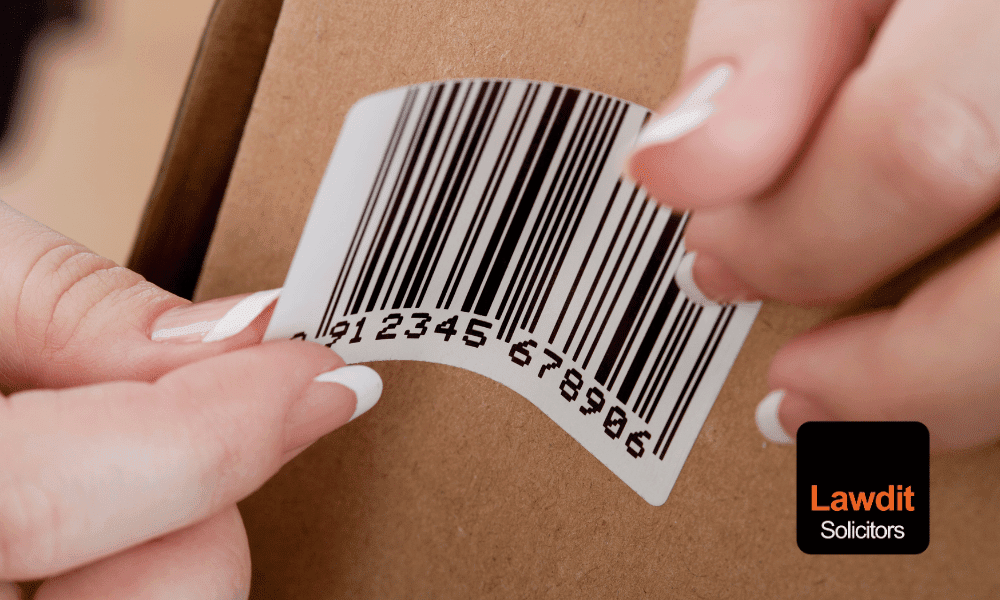
Fulfilment Network Stock Keeping Unit is referred to as FNSKU. To put it simply, Amazon’s unique barcode label is what links a product to a certain seller. Consider it your inventory’s DNA tag from Amazon. You (or your manufacturer or supplier) must print and affix the unique FNSKU that Amazon creates for each product each time you establish a new FBA listing to each unit you ship to Amazon’s warehouse. Usually, a barcode is included with an alphanumeric code, such as X000ABC123.
Why is this important? This is important because thousands of retailers’ products are stored in Amazon’s warehouses. Amazon uses that label to identify whose unit is whose when you and another seller stock the same generic goods. Using Amazon’s FNSKU label lets Amazon know that the item is yours. If you don’t use it and just use the manufacturer’s barcode (UPC/EAN), Amazon may combine your inventory with other items, a practice known as commingling. Commingling can result in various problems, such as sending a poor-quality product to a consumer under your name. To keep their merchandise distinct, the majority of vendors prefer to use FNSKUs.
The FNSKU is your friend—until it isn’t, that is. And by that, I mean that it becomes a big pain point when something goes wrong with those labels or how Amazon handles them. Let’s examine a few typical issues with FNSKUs and their effects.
Typical FNSKU Issues Suppliers Deal With
1. Problems with Label Printing and Quality: One of the most common occurrences is when Amazon marks your package as having “missing or unreadable FNSKU labels.”. You may ask yourself, “How could the labels be incorrect when I printed them directly from Amazon’s system? However, several situations could occur:
- The labels may not have been properly attached, such as over a seam or curved surface, where they subsequently peeled off or became obscured.
- The barcode may not scan if the print quality is poor. The barcode may be too hazy or may smear during transit if you used an inkjet printer on the incorrect paper. Although Amazon’s scanners are quick, they aren’t always understanding; if they can’t scan anything in a second, they’ll flag it as problematic.
- Inaccurate product label: errors do occur. Amazon will be highly perplexed and will likely believe your widget is something else entirely if you sell numerous items and a batch of them somehow received the incorrect FNSKU stickers (mixing up the labels of two products).
- Missing information on label: The product title and condition (such as “New”) should be displayed in text on every FNSKU label. A specific format (with margins, etc.) is required by Amazon. Amazon may object if you or your supplier customised the labels and omitted certain information.
As a result, Amazon will label these as “shipment issues” and frequently put those goods on hold. The shipment may still reach them, but until the problematic units are rectified, they cannot be fulfilled. In the worst situations, Amazon may request that you return the items or charge you for re-labelling at the warehouse (at a per-unit fee). In the worst-case scenario, you may receive a notification in Seller Central demanding you provide confirmation of correct labelling.
2. The mystery of lost inventory, or “unknown FNSKU”, is a frightening situation that many merchants have faced: You ship, say, 100 items to Amazon. Amazon certifies that the boxes were delivered, but they only give you credit for 80 units when they check the merchandise in inventory. The others? They vanish from sight. Something like, “We detected things with an unknown FNSKU that do not correlate to your account, so we cannot assign those to you,” is what Amazon Help says when you ask a question. If you are selling a single branded product, could you please clarify how it might be considered unknown?
- This frequently suggests that there was an issue with Amazon’s receiving procedure. The warehouse workers may have discovered units without a legible barcode and put them aside because some labels may have fallen off or been damaged.
- In certain situations, it could be a symptom of a mix-up: things were scanned under a different shipment or as unassigned stock after your package was opened, and they were mixed in with the batch of another shipment.
Alternatively, it’s possible that Amazon’s system misread your barcode due to a scanner malfunction and recorded those units under a phantom SKU.
As a result, Amazon usually claims that it is not liable for things that arrive without the correct identification, suggesting that the seller is to blame (the label was missing or fell off). From your perspective, Amazon is to blame because you did everything correctly. You might not get paid for large inventory losses as a result of this blame game. There have been instances where merchants have lost thousands of pounds’ worth of inventory as a result, and they have had difficulty getting Amazon to reimburse them since the company insisted that “labels were missing, not our concern.”
3. A little off topic, but worth bringing up, is commingling confusion (when not using FNSKU). You may encounter particular issues if you choose to use the manufacturer’s barcode alone rather than the FNSKU to identify units (Amazon refers to this as stickerless inventory or commingled inventory).
- Because Amazon assumes all units are the same, a lower-quality or counterfeit item supplied by another seller under the same UPC may be shipped to your client. Even though it wasn’t your unit, you will be held accountable for any negative reviews or safety concerns.
It becomes even more difficult to determine the ownership of products if inventory discrepancies occur. “We sent all units out; therefore, any missing ones aren’t our problem,” Amazon may claim, although it’s possible that they shipped someone else’s units as yours and misplaced yours. It’s disorganised.
The majority of genuine sellers steer clear of commingling because of these factors. FNSKU preserves traceability but requires a little more work.
(If you’re a new seller reading this, utilize FNSKU labels to safeguard the integrity of your brand.)
4. Amazon’s Overzealous Scanning Systems: In several cases, Amazon has implemented new warehouse scanners or protocols that have proven to be unreliable or excessively sensitive. Shipments that previously passed without any issues suddenly begin to signal errors like “label illegible” more frequently. The seller’s side has not experienced any changes, leaving them perplexed.
It might be a problem with the Amazon system. Amazon effectively placed the onus of “improving label quality” or retesting shipments on sellers when some complained that scanning technology in some fulfilment centres was broken, leading to an increase in label read errors. It’s good to know that not all FNSKU issues are your fault or under your control, but you can only wait for Amazon to fix their system.
5. Accountability and Reimbursements: In theory, Amazon is required to reimburse you for the value of any lost or damaged goods that occur within their control. But the fine print counts. If they think you broke a rule or made a mistake that led to the loss, they won’t pay you back.
Additionally, they frequently repay at “cost” or an estimated wholesale value rather than full retail, and occasionally those estimations are far too low (plenty on the pound, essentially). Being out of pocket for a product you know you sent in correctly may be quite upsetting, and as a supplier, you may discover that Amazon is ready to attribute losses to FNSKU errors to declare, “Not our fault; you mislabelled; case closed.”
After describing this terrifying tale of FNSKU issues, let’s discuss potential fixes. How may these problems be avoided or fixed?
How to Handle FNSKU Headaches: A Comprehensive Guide
1. Clearly Identify the Issue: What type of FNSKU problem are you dealing with?
- Did Amazon report an issue at the shipment level, such as “product labels missing info” or “cannot scan FNSKU”?
- Or did you suspect an FNSKU mix-up after finding a discrepancy (such as missing units)?
- Is it possible that a consumer received the incorrect item, suggesting mislabeling or commingling?
Being aware of the beast’s nature enables you to react appropriately. For any notifications, check your Seller Central Shipping Queue and Performance Notifications. Amazon occasionally lists particular ASINs and problems (such as “X units had barcode errors in shipping ID _____”).
2. If the problem is with the label’s quality or compliance:
- Verify your labels again by returning to the label PDF that Amazon provided. Are the product title, condition, barcode with appropriate silent zones/margins, human-readable text of the FNSKU or ASIN, and the FNSKU code all present? The precise prerequisites can be found on Amazon’s support pages. Correctness is frequently ensured by simply reprinting from their system.
- Evaluate print quality: If you used inkjet printing on regular paper, think about upgrading. Use a laser printer or specialised thermal label printer for optimal results. Compared to ink, laser toner is less prone to bleed or fade. Additionally, many professional warehouses employ thermal printers (such as Zebra or Dymo) for barcodes.
- Label material matters: labels made of regular paper might smear if they get warm or somewhat damp. There are labels for polyester, or “weatherproof”, if your products may be exposed to heat or dampness. Make sure your label size satisfies Amazon’s requirements; typically, they advise labels for FNSKUs to be 3.3″ x 1″ or comparable.
- Positioning: Avoid placing the FNSKU over corners or seams and instead place it on a level, scannable surface. Put the label on the outside of the polybag if your product is in one, or make sure it is readable through the bag and shielded from smudges. If the item is small, you may need to attach a hang tag that stays with the item or attach the label to its packing.
- Once any possible problems have been resolved, notify Amazon using the case log or shipment workflow. Amazon frequently requests that you acknowledge the issue and attest to the fact that you have resolved it. For example, they might ask you to check a box or finish a quick test on appropriate labelling (yes, Amazon does occasionally test sellers to ensure they understand the guidelines!). To prevent delays in the processing of your package, take immediate action.
- File a claim if required: You can click “Submit a dispute” on the shipping issue notification if you firmly feel that Amazon is at fault (for example, you followed all the instructions, and they still flagged you). Request clarification or supporting documentation; occasionally, they will offer a picture of the problem. At least you know it was an isolated incident if one label was torn. In other situations, disagreeing could cause them to check again and discover their mistake. You should give it a shot.
3. If FNSKU Problems Caused Inventory to Go “Missing”:
- Create a Seller Support case. Be succinct and straightforward: “Shipment XYZ indicates that 20 items have not been received. The support staff reported that the FNSKU of the units was unknown. Every unit was branded in compliance with Amazon’s policies. Kindly look into the labels in question and offer proof.
- Offer evidence: if you have pictures of your products with labels before they are shipped, include them. (Pro tip: Before shipping, it’s a good idea to snap pictures of at least one box’s contents with the products tagged. This isn’t always feasible in large quantities, but it can help you avoid a dispute if you ship expensive items.
- Gently but firmly escalate: if a copy-paste policy passage about “if labels are missing, we don’t reimburse” doesn’t address your situation, reply that you need a supervisor or escalation team to look into it. Stress the importance of the situation and that you fulfilled all the requirements.
Mention Amazon’s FBA lost inventory reimbursement policy, which states that you expect a reimbursement for lost units unless they can prove you violated a prep requirement. Sometimes simply demonstrating that you are aware of the policies prompts a more thorough review. • Keep your communications professional and detailed.
- Timeline: Keep in mind that there is usually a window of time during which you must report shipment inconsistencies (for example, within nine months of shipment, although the sooner the better, ideally within weeks of delivery). Don’t wait.
- Regretfully, Amazon may occasionally refuse to compensate, using the enigmatic “unknown FNSKU” justification forever. At this point, you must balance the effort required to take more action (legal or otherwise) against the amount of money lost. Some vendors have contacted legal counsel to threaten action against Amazon in writing if the amount is substantial. Sometimes that can lead to a reassessment. Amazon responds to legal correspondence in a more professional manner, but they don’t readily accept responsibility. In a moment, more on external possibilities.
4. If You Run Into Commingling Problems:
- Turn off commingling for upcoming units right away if you think that a consumer received the incorrect item or that it was mixed up due to improper labelling. You can choose to label your own inventory in the Seller Central settings for FBA. To recover control, you may need to recall current inventory and re-label it with your FNSKU.
- Contact Seller Support with proof of any particular incident (such as a consumer receiving a phoney item) and demand an investigation. Amazon takes consumer complaints seriously. Amazon may actually take action against a vendor who sends fraudulent items. If you can, show that the product the consumer received wasn’t from your inventory to avoid having alerts about inauthentic products placed on your account in the interim.
- Prevention is crucial once more. You can drastically cut down on these confusions by using your FNSKU.
5. Growing Outside of Typical Channels (When Amazon Refuses to Back Down):
• Suppose that after attempting the aforementioned solutions, Amazon still responds with “Sorry, no reimbursement,” or the problem is still not fixed. If the amount of money involved is substantial at this point, you might think about submitting a formal complaint to Amazon’s notice address (provided in the Business Solutions Agreement) or even contacting the office of Amazon’s managing director (there is an email for Amazon executive seller relations that is frequently referred to as Jeff’s email [which used to be Jeff Bezos, but is now Andy Jassy, but anyway]).
• Arbitration or legal action are other options. Note: Many issues are resolved through arbitration rather than in court, and Amazon’s conditions for UK/EU merchants include Luxembourg law. However, if Amazon’s violation is obvious, you could speak with a lawyer about the viability of a lawsuit. For instance, they would be in violation of the FBA contract if they blatantly misplaced your products and refused to pay. As we’ll cover in the following post, the Unfair Contract Terms Act may be able to assist in contesting any provision that completely releases Amazon. Occasionally, Amazon may reconsider if they get a letter on official letterhead stating that their denial is inconsistent with their legal duties.
Legal routes, however, take a lot of time. If at all possible, the majority of small businesses attempt to fix problems within Amazon. A resolution may finally be reached by using Amazon’s internal dispute procedures and exercising persistence (e.g., respectfully contacting seller support and requesting updates, etc.). I understand it’s not enjoyable.
6. Learn and Adjust: After you’ve had one FNSKU disaster, take it as a teaching moment:
- Stricter checks should be implemented in your warehouse or with your supplier if the problem was with the labelling. Perhaps include a stage for verification where one person adheres the labels and another scans each one to make sure it matches the correct product.
- If Amazon made a mistake, perhaps refrain from delivering large shipments all at once. Some vendors divide their stock into several shipments to several storage facilities. It can lessen the chance of a single, significant loss, but it is not infallible. Using an Amazon partner carrier that offers improved tracking and delivery verification is another option.
- Maintain records of everything, including weight, measurements, and box content lists. You have proof of each package’s existence and contents if Amazon states, “We only got 2 boxes, not 3,” since some experienced vendors even weigh each box and describe its contents.
- Additionally, be sure to update your “source cost” information for every SKU in Amazon’s system (you may enter your cost per unit in a part of Seller Central). In this manner, Amazon will use the cost you supplied rather than a haphazard lowball estimate if reimbursement occurs. Many vendors overlook that field, which they subsequently regret when reimbursements are insufficient.
Prevention: The Best Ways to Prevent FNSKU Issues
Since avoiding these issues completely is the best course of action, let’s compile some preventive advice into a handy list:
Why Use FNSKU Labels for All FBA Inventory: Although using manufacturer barcodes instead of labelling may seem more convenient, the hassles of commingling outweigh the benefits. Distinct FNSKUs maintain a clean supply chain.
- For high-quality label printing, use thermal or laser printing. Make sure the barcodes are clear. Don’t scale or shrink when printing from PDFs; instead, print at 100% size to maintain the barcode measurements.
- Use the Correct Label Format and Size: Generally speaking, Amazon suggests labels that are at least 2″ x 1″ (5 x 3 cm) in size. Barcodes that are too small can cause problems. When creating your own labels, make sure to include the necessary wording (Amazon’s default labels have it; don’t remove it).
- Don’t Cover Important Information: To prevent confusing scanners, don’t position the FNSKU over other barcodes or information on the product package. There should only be one scannable barcode visible; either hide the original UPC in some way or cover it with the FNSKU. Mis-scans can occur when there are several visible barcodes.
- Secure the Labels: Ensure that they adhere properly. If your product comes in a bag, think about applying a strong adhesive or placing the label inside an outer clear pouch. Cheap labels can occasionally be removed by temperature and humidity.
- Maintain Shipment Records: Before a carton is sealed, think about snapping a short picture of its contents that shows the FNSKUs. Additionally, preserve your carrier receipts and packing lists for shipments.
Don’t put all of your eggs (products) in one basket; instead, ship in reasonable batches. To prevent one glitch from destroying all stock, try to distribute inventory over a few shipments (and possibly to multiple fulfilment centres if Amazon separates them).
- Track Your Shipments: Keep an eye on the reception procedure after sending inventory. Amazon gives information about the quantity of units received. Investigate as quickly as possible if something seems strange or has been stuck for days.
- Keep Up with Policy Changes: Amazon adjusts its FBA policies from time to time. There may be a new regulation pertaining to packing or labelling. For instance, they included specifications for specific products (such as warnings about suffocation for polybags and expiration dates on labels for consumables). Failing those can also lead to inventory concerns, even though they are not specifically FNSKU issues.
- Participate in the Seller Community: People share their problems and solutions in forums and groups, such as the Amazon Seller Forums or third-party communities. You may be the first to hear about any changes made to FNSKU processing by Amazon. Learning from others’ experiences is a smart approach to avoid feeling alone when Amazon does something mind-blowing—trust us, it happens.
It is manageable, so don’t panic.
When an FNSKU problem occurs, it’s simple to become frustrated. You may feel like you’re shouting into thin air when you try to contact Seller Support for assistance or that Amazon is holding you responsible for something that wasn’t your fault. Breathe deeply. Unfortunately, these issues are a natural byproduct of conducting business on such a large platform. The secret is to approach it carefully rather than in a panic or give up:
- Be persistent and patient: You might be placed on hold while contacting Seller Support, and you might initially receive a canned response. Continue. Be firm but courteous. Consult the particular policies and facts. Finding a single Amazon representative who truly understands the problem and can fix it may occasionally require several exchanges.
- Professionalism: Keep thorough records of all correspondence. If the situation worsens, you may use those documents as proof. Make a professional tone; even though you may be angry or disappointed on the inside, make your letter accurate and polite. It is not only the proper course of action, but it also frequently produces superior outcomes.
- Recognise When to Ask for Help: Consider seeking outside assistance if you’re truly struggling. Consultants who specialise in resolving issues with Amazon accounts may possess valuable strategies. Of course, a legal opinion can help you understand your alternatives in major financial conflicts.
Ultimately, each week, thousands of suppliers successfully ship their inventory to Amazon. Although FNSKU issues do exist, they only affect a small percentage of shipments. Therefore, don’t let your fear of a setback prevent you from expanding your company. You’re already ahead of many sellers who discover these mistakes the hard way by being aware of them and getting ready for them.
To sum up, an FNSKU is a small label that plays a significant role. When it works well, it protects your inventory while you are the owner, making it your reliable ally. Expenses and confusion may arise if the FNSKU malfunctions or if Amazon manages it poorly. However, you are now prepared to deal with those situations. Happy sales, and may your barcodes always work in your favour! The next time you say, “I have a problem with my FNSKU,” you should ideally follow it up with, “But I know how to repair it.”
Lawdit Solicitors was born in 2000. Amazon 1995!
Get in touch today at info@lawdit.co.uk